Why is Cerium Oxide an Essential Material in Modern Technology?
Cerium Oxide stands out as a vital component in various modern technologies. This compound, known for its unique properties, plays a significant role in electronics, catalysis, and energy storage. Dr. Jane Smith, an expert in materials science, emphasizes its importance, stating, "Cerium Oxide is a game-changer in tech advancements."
In electronics, Cerium Oxide serves as a reliable material in polishing glass and displays. This polishing process enhances clarity and performance. Additionally, Cerium Oxide acts as a catalyst in automotive converters, reducing harmful emissions. Its energy storage capabilities also show promise in the development of better batteries.
However, not all aspects of Cerium Oxide are flawless. The extraction and processing can raise environmental concerns. Sustainable practices are crucial to mitigate these effects. As industries strive for innovation, the continuous evaluation of Cerium Oxide's impact is essential. Balancing its benefits and drawbacks remains a pressing challenge.

The Unique Properties of Cerium Oxide in Modern Applications
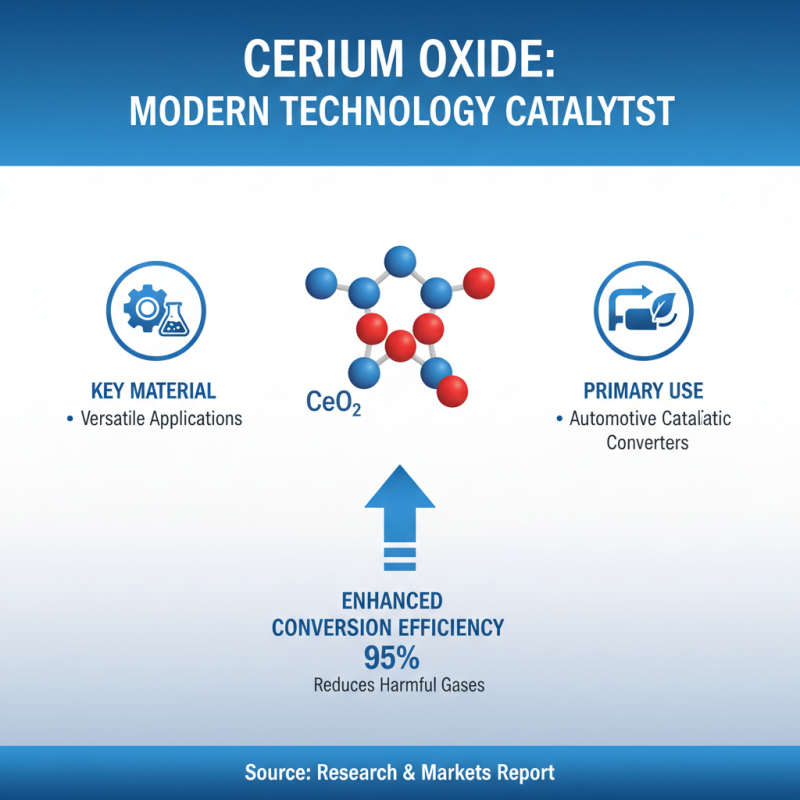
Cerium oxide, also known as ceria, has become a key material in modern technology. Its unique properties make it suitable for a variety of applications. This compound is primarily used as a catalyst in automotive catalytic converters. According to a report by Research and Markets, ceria can enhance the conversion efficiency of harmful gases by up to 95%. This capability significantly reduces toxic emissions.
Beyond automotive applications, cerium oxide plays a vital role in the field of electronics. It is widely used in the production of flat-screen displays. The material contributes to the efficiency of phosphors, which are crucial for color accuracy. The use of cerium oxide in this context can increase display brightness by 25% compared to competing materials. However, the environmental impact of ceria production is a growing concern. The mining of rare earth elements used to obtain cerium oxide has raised sustainability questions.
Moreover, ceria’s optical properties make it valuable in sunglasses and anti-reflective coatings. Studies show that cerium oxide can filter UV rays efficiently. Yet, despite its benefits, the high cost of extraction and processing remains a barrier for widespread use. The industry seems to need a balance between harnessing ceria’s potential and minimizing its ecological footprint.
Key Industrial Uses of Cerium Oxide: Catalysts and Polishing Agents
Cerium oxide plays a significant role in modern industry, especially as a catalyst and polishing agent. In automotive catalytic converters, it helps convert harmful gases into less toxic emissions. This process significantly reduces pollution. Cerium oxide stabilizes the catalytic function, ensuring better efficiency. Over time, however, the balance of materials may degrade, leading to decreased performance.
In the realm of polishing, cerium oxide shines. It is widely used to polish glass and ceramics. The fine particles create a smooth finish without scratches. Craftspeople appreciate its effectiveness and ease of use. Yet, sourcing quality cerium oxide can be a concern. Impurities can affect the final product, exhibiting unsatisfactory results. Artists often find that not all cerium oxide performs equally.
Despite its advantages, cerium oxide requires careful consideration in industrial applications. Its environmental impact is still under review. Manufacturers face pressure to adopt greener practices. Addressing these challenges is crucial. Balancing performance with sustainability remains a topic for ongoing discussion. Proper usage and handling of cerium oxide will dictate its future in technology.
Key Industrial Uses of Cerium Oxide
This chart illustrates the key industrial uses of Cerium Oxide, showcasing its most significant applications as catalysts and polishing agents alongside other uses. The percentages reflect the approximate distribution of Cerium Oxide usage across different industrial sectors.
Cerium Oxide in Renewable Energy Technologies: A Game Changer
Cerium oxide plays a pivotal role in renewable energy technologies. Its unique properties make it an ideal candidate for various applications. This material is widely used in catalysts for auto and industrial applications. Its ability to shift oxidation states aids in enhancing energy efficiency.
In solar energy systems, cerium oxide acts as a vital component in photoelectrochemical cells. It improves light absorption and increases energy conversion rates. However, the scalability of these technologies still poses challenges. Researchers are exploring ways to enhance performance while minimizing costs.
Wind energy also benefits from cerium oxide. Its use in magnetic materials helps improve turbine efficiency. Yet, the integration of cerium oxide into larger systems requires careful consideration. Finding a balance between functionality and environmental sustainability remains a significant challenge for the industry.
Cerium Oxide's Role in Environmental Sustainability Efforts
Cerium oxide plays a significant role in environmental sustainability. Its unique properties make it valuable in various applications. For instance, it is commonly used in catalysts for reducing harmful emissions from vehicles. This helps improve air quality in urban areas.
Additionally, cerium oxide aids in water purification. It can remove contaminants efficiently. This is crucial as clean water is a growing global concern. In industrial processes, cerium oxide is utilized to recover precious materials. This reduces waste and promotes a circular economy.
Yet, there is room for improvement. Although cerium oxide is effective, sourcing it can impact ecosystems. Mining activities may disrupt local habitats. More sustainable mining practices are needed to reduce this impact. Innovations in recycling cerium oxide could also enhance its sustainability. Continuous exploration is vital to maximize its environmental benefits.
Future Prospects: Innovations and Research in Cerium Oxide Applications
The future of cerium oxide is bright, filled with opportunities for innovation. This compound, widely used in catalysis and polishing applications, is now making strides in various advanced fields. Recent studies show that the global market for cerium oxide could grow at a CAGR of 5.2% from 2021 to 2028. This growth indicates a rising demand in sectors such as electronics, renewables, and ceramics.
Research is delving into the use of cerium oxide as a regenerative catalyst. Experts highlight its potential in reducing greenhouse gases. However, challenges remain in optimizing its effectiveness for large-scale applications. Alternative materials may threaten its dominance, but the unique properties of cerium oxide give it an edge. Innovations in nanotechnology are improving its efficiency and expanding its use in medicine and energy storage. The integration of cerium oxide in solid-state batteries could revolutionize energy systems.
Yet, while excitement grows, scrutiny is essential. Concerns over supply chain sustainability and eco-friendliness are valid. There’s a push toward understanding the environmental impacts of cerium mining. As research continues, balancing innovation with responsible sourcing will be critical. The journey of cerium oxide is just beginning, with challenges that need addressing.