Leave Your Message

How to Choose the Right Cerium Oxide Supplier?

How to Choose the Right Cerium Oxide Supplier?

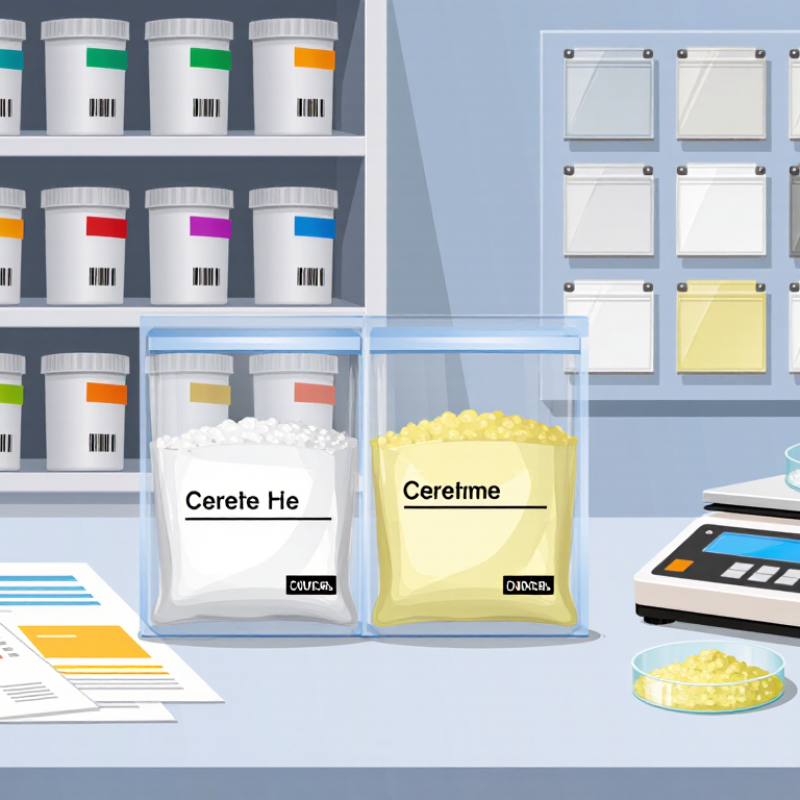
Choosing the right Cerium Oxide supplier requires more than comparing prices. The powder may look identical in two clear bags, yet perform very differently on glass, optics, or automotive surfaces. Particle size distribution, purity, moisture, and polishing performance can change the final result.

Nanoceria researcher Dr. Sudipta Seal has emphasized, “Surface chemistry matters as much as particle size.” This principle applies to every purchasing decision. A supplier should provide a recent certificate of analysis, supported by measurable data. Check the CeO2 percentage, rare-earth impurity profile, D50 value, pH, and loss on drying. Ask whether these results represent your actual production lot.

Experience also matters. A reliable supplier should explain how its Cerium Oxide is produced, classified, packed, and stored. For polishing applications, request a small trial sample. Test it on the same glass grade, pad, pressure, and slurry concentration used in production. Record haze, removal rate, scratches, and pad loading.

Small details matter.

Do not rely only on attractive technical sheets. Packaging should resist moisture and contamination, especially during long storage. Lot numbers should remain traceable from delivery to production records. Technical support should also be practical, not vague.

A low-cost material can become expensive after rework, unstable batches, or rejected surfaces. Still, supplier selection is rarely perfect. Even a respected company may need closer process control. The best decision combines verified data, application testing, transparent communication, and a willingness to question convenient assumptions.
How to Choose the Right Cerium Oxide Supplier?

Supplier Selection Criteria for Cerium Oxide

How to Choose the Right Cerium Oxide Supplier?

Supplier selection should begin with measurable technical requirements, not attractive pricing. Cerium oxide grades can differ in purity, particle-size distribution, surface area, moisture, and trace metals. Ask for a recent certificate of analysis and test methods. Then compare three production lots, not one convenient sample. Consistency matters greatly in polishing compounds, catalysts, and glass applications. Small variations can change removal rates, slurry stability, or finished-surface quality.

Supply resilience deserves equal attention. The U.S. Geological Survey reported approximately 350,000 metric tons of rare-earth oxide equivalent in global mine production during 2023. China accounted for about 240,000 metric tons. Cerium is not separately reported in that figure, but the concentration illustrates a real sourcing risk. Evaluate ore origin, refining capacity, inventory policy, lead times, and backup production sites. A supplier should also provide traceability records, safety data sheets, transport documents, and change-notification procedures. ISO 9001 certification helps, but it does not prove that every batch meets your process needs.

Test before committing.

A practical qualification plan includes laboratory trials, packaging checks, and a small production run. Inspect whether the powder arrives sealed, dry, and free from visible agglomerates. Discuss rejected-lot handling and technical response times in writing. Cost-per-kilogram can be misleading when oversized particles create rework. No supplier is perfect. A weakness in this method is its testing cost, yet skipping validation can create larger losses later. Select the supplier that demonstrates repeatable evidence, not impressive claims.

How to Choose the Right Cerium Oxide Supplier?

Supplier Selection Criteria for Cerium Oxide

Product purity and batch consistency should receive the highest priority because they directly affect polishing performance and process stability. COA traceability, particle-size control, technical support, lead time, documentation, packaging safety, and total cost should also be evaluated before approving a cerium oxide supplier.

Cerium Oxide Grades, Purity Levels, and Product Forms

How to Choose the Right Cerium Oxide Supplier?

Cerium oxide grades should match the real application, not just the lowest quoted price. Polishing grades often require controlled particle size and low contamination. Ceramic applications may need stable calcination behavior and consistent rare earth composition. Catalytic uses can demand higher surface area and carefully measured oxygen storage properties. Ask the supplier how each grade is tested.

Purity levels can range from commercial grades to 99.9% or higher. However, a higher number does not always mean better performance. Trace elements, moisture, ignition loss, and particle distribution may affect processing results. Request a current certificate of analysis for every lot. Check whether the supplier provides test methods, batch identification, and retained samples.

Data matters.

Product form also changes handling. Dry powder suits blending and pressing, while slurry or aqueous dispersion can reduce dust during polishing. Granules may improve feeding in automated equipment. Confirm solids content, viscosity, sedimentation behavior, and packaging conditions. Small samples are useful. They are not proof of long-term consistency. A reliable supplier should explain storage limits and realistic shelf life.

My own purchasing rule would remain cautious: if technical answers sound vague, the material probably needs more verification before scale-up.

Evaluating Supplier Quality Control and Certifications

How to Choose the Right Cerium Oxide Supplier?

A reliable cerium oxide supplier should show more than an attractive price. Ask for a current certificate of analysis for every production batch. It should list purity, particle size, moisture, and key impurities. These details matter in polishing, glass processing, and technical ceramics. I also check whether the test methods are clearly identified. Vague results create unnecessary risk.

Quality control must be traceable. Look for batch numbers, retained samples, inspection records, and controlled packaging procedures. An ISO 9001 certificate can indicate an organized quality system. However, verify its certificate number, validity, issuing body, and covered production site. Certification scope matters. A supplier may hold a certificate, but not for the material you need. This is an easy detail to miss.

Ask whether particle size is measured by laser diffraction, microscopy, or another method. Different methods can produce different interpretations. Request representative samples and compare them with the final batch. I once reviewed a powder that matched the purity specification but performed poorly because its particle distribution was inconsistent. The paperwork looked acceptable. The process result was not. Suppliers should also provide safety data and explain corrective actions after a failed inspection. Honest answers are valuable, even when the answer is inconvenient. Personally, I would rather see a documented weakness than an effortless promise.

How to Choose the Right Cerium Oxide Supplier? - Evaluating Supplier Quality Control and Certifications

Evaluation Area Quality-Control Criterion Recommended Benchmark or Requirement Objective Evidence to Request Suggested Weight
Quality Management ISO 9001 quality management certification A current certificate issued by an accredited certification body, with the manufacturing or processing scope covering the supplied material. Certificate, scope statement, expiry date, certification-body details, and latest surveillance or recertification status. 12%
Product Identification Chemical identity and grade definition Cerium(IV) oxide, commonly represented as CeO2, with a clearly defined grade, intended application, purity basis, and packing format. Technical data sheet, specification sheet, product code, CAS reference where applicable, and approved sample. 8%
Chemical Purity CeO2 content and trace impurities Acceptance limits must be agreed in the purchase specification. Trace elements such as Fe, Si, Al, Ca, Na, and other rare-earth contaminants should be controlled according to application risk. Lot-specific certificate of analysis supported by ICP-OES, ICP-MS, XRF, or another validated analytical method. 15%
Particle Characteristics Particle-size distribution and agglomeration control D10, D50, and D90 limits should be specified for the application; the test method and dispersion procedure must remain consistent between lots. Particle-size report using laser diffraction or an agreed equivalent method, including sample preparation conditions. 12%
Physical Properties Specific surface area, moisture, and loss on ignition Limits should be defined according to polishing, catalyst, ceramic, glass, or other end-use requirements; moisture control is especially important for powder handling and dispersion. Lot-specific test results using validated methods such as BET surface-area analysis and controlled gravimetric testing. 10%
Testing Capability Laboratory competence and measurement traceability Critical tests should be performed by a competent laboratory using calibrated equipment, documented procedures, and suitable reference materials or controls. ISO/IEC 17025 accreditation where applicable, calibration records, method-validation summaries, and test-report examples. 10%
Batch Consistency Lot release and change-control system Every shipment should be traceable to a production lot, with defined release criteria and advance notification of changes affecting composition, process, site, or packaging. Batch numbering procedure, retained-sample policy, change-notification procedure, and historical CoA comparison. 12%
Regulatory Compliance Chemical regulatory documentation Provide current Safety Data Sheet documentation and assess applicable obligations under regulations such as REACH, CLP, and RoHS based on destination market and product use. Current SDS, regulatory declaration, restricted-substance statement, and destination-market compliance review. 8%
Environmental Management ISO 14001 environmental management certification Prefer a current certificate covering the relevant production site; verify that environmental controls address waste, emissions, water, and chemical handling as applicable. Certificate, scope, audit status, environmental permits where relevant, and documented corrective actions. 6%
Occupational Safety Worker health and safety controls The supplier should control powder exposure, dust generation, storage, labeling, personal protective equipment, and emergency response. ISO 45001 certificate where available, risk assessments, exposure-control procedures, and incident-management records. 4%
Packaging and Logistics Packaging integrity and storage conditions Packaging should protect the powder from moisture, contamination, and mechanical damage; labels should identify product, lot, net weight, handling information, and production or expiry information where applicable. Packaging specification, label sample, transit-test information, storage instructions, and shipping traceability. 5%
Customer Support Technical response and complaint handling The supplier should provide a defined complaint process, root-cause analysis, corrective action, and response timelines for nonconforming material. Nonconformance procedure, example corrective-action report, technical contact details, and agreed response-time targets. 4%
Total Suggested Evaluation Weight 100%
Note: Cerium oxide specifications vary by application. Purity, particle size, surface area, moisture, and impurity limits should be finalized through a signed product specification, approved sample, and lot-specific certificate of analysis.

Comparing Pricing, Supply Capacity, and Delivery Reliability

Choosing a cerium oxide supplier requires more than comparing the lowest quoted price. A practical review should examine purity, particle size, packaging, and testing costs together. A cheaper quotation may exclude inspection fees, special packing, or inland transport. Ask for a recent certificate of analysis and compare the same grade across suppliers. Small differences in particle distribution can affect polishing speed and surface quality.

Supply capacity deserves direct evidence. Request monthly production limits, available raw material sources, and normal order quantities. A supplier with strong capacity should explain how it handles sudden demand increases. Ask whether production is continuous or arranged only after receiving payment. This detail can expose hidden delays. I would also check whether several batches show consistent color, purity, and particle size. One sample is not enough.

Delivery reliability depends on measurable habits. Review the supplier’s average lead time, dispatch records, packaging method, and response process for damaged goods. A written delivery schedule is useful, but shipping history is stronger evidence. Include buffer stock for port congestion, weather, or inspection delays. This costs more. It may prevent a much larger production loss. Payment terms, delivery conditions, and replacement responsibilities should be written clearly. Some buyers focus heavily on price and ignore these details. I have made that mistake before. A supplier can look efficient on paper yet struggle with one urgent order. Regular communication and small trial orders reveal that weakness early.

Verifying Technical Support, Compliance, and Long-Term Service

Choosing a cerium oxide supplier requires more than comparing purity percentages. Technical support should begin with clear product data, including particle size distribution, surface area, moisture content, and batch consistency. Ask for a recent certificate of analysis, not a generic template. Request a small sample, then test it under your actual polishing pressure, slurry concentration, and material conditions.

Good suppliers explain their testing methods and can investigate unusual results. They should provide safety data sheets, lot traceability, packaging details, and storage guidance. Compliance documents must match your destination market and intended application. Check whether the supplier follows relevant chemical regulations, quality systems, and export requirements. A certificate alone is not enough.

Look for dependable service after the first order. Can the supplier reserve consistent production capacity? Will technical staff respond when particle behavior changes? Ask how complaints are recorded and how corrective actions are verified. During a factory discussion, note whether staff describe real controls or repeat polished phrases. That distinction matters.

I once focused too heavily on price. It delayed a production trial.

Long-term reliability also depends on communication. Confirm lead times, minimum quantities, shelf-life information, and backup plans for shortages. A supplier may appear technically strong but still lack practical follow-through. Review performance across several batches before approving regular supply. This slower approach feels inconvenient, yet it exposes weaknesses early and protects your process later.