2025 How to Source Rare Earth Oxides for Emerging Technologies
As the demand for advanced technologies continues to rise, the significance of Rare Earth Oxides (REOs) in the global market cannot be overstated. The year 2025 promises to be pivotal for industries relying on these critical materials, which are essential for the manufacturing of everything from smartphones to renewable energy systems. According to Dr. Anna Li, a leading expert in the Rare Earth Oxides industry, "The future of technology hinges on our ability to efficiently source and utilize Rare Earth Oxides, which are not only vital for innovation but also for achieving sustainability."
Navigating the complexities of sourcing Rare Earth Oxides requires a deep understanding of both the market dynamics and the geopolitical landscape surrounding these materials. With supply chains increasingly scrutinized and competition intensifying, industries must adopt strategic approaches to ensure a stable and sustainable supply of REOs. In light of this, stakeholders must explore new partnerships, engage in research and development, and prioritize recycling efforts to capitalize on the opportunities presented by these precious resources.
In conclusion, as we approach 2025, the quest for reliable sources of Rare Earth Oxides stands at a crossroads, presenting both challenges and opportunities for emerging technologies. The proactive engagement of industry participants in this field will not only shape the landscape of technological advancement but also influence the broader dialogue on sustainable practices and resource stewardship in the years to come.

Understanding Rare Earth Oxides and Their Importance in Technology
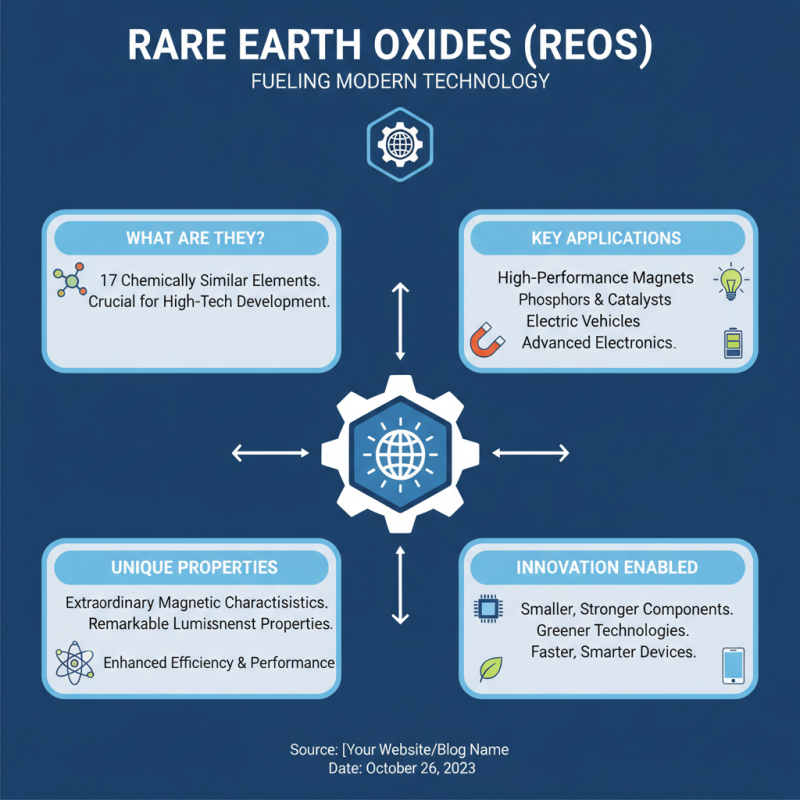
Rare Earth Oxides (REOs) are a group of 17 chemically similar elements that play a crucial role in the development of modern technologies. These oxides are essential for the production of high-performance magnets, phosphors, catalysts, and other components critical to emerging technologies such as electric vehicles, renewable energy systems, and advanced consumer electronics. Their unique properties, including extraordinary magnetic and luminescent characteristics, enable innovations that improve efficiency and performance in various applications.
As the demand for cleaner energy solutions and innovative technological advancements grows, so does the significance of rare earth oxides. They are vital for the manufacturing of superconductors, solid-state batteries, and other cutting-edge materials that facilitate advancements in sectors ranging from telecommunications to aerospace. Understanding the importance of REOs not only highlights their role in economic and technological development but also brings attention to the challenges of sourcing these materials sustainably. As we look towards 2025, ensuring a reliable supply chain for rare earth oxides will be essential for fostering innovation and maintaining competitive advantages in the global market.
Identifying Key Sources of Rare Earth Oxides Worldwide
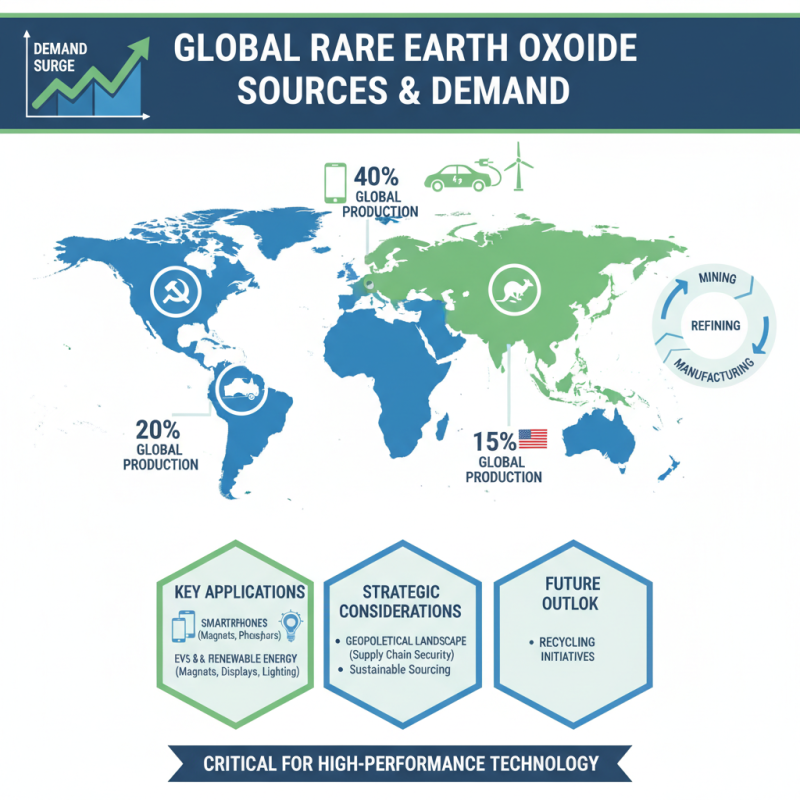
As the demand for emerging technologies continues to surge, identifying key sources of rare earth oxides (REOs) is becoming increasingly critical. These materials are essential for manufacturing high-performance magnets, catalysts, and phosphors used in various applications such as smartphones, electric vehicles, and renewable energy systems. Major sources of REOs are primarily found in countries like China, Australia, and the United States, which together account for a significant portion of global production. The geopolitical landscape and environmental considerations also play a crucial role in sourcing strategies, as companies look for sustainable and reliable partnerships.
In addition to traditional mining operations, advancements in recycling technologies and urban mining are emerging as vital methods for sourcing rare earth oxides. Companies are beginning to study end-of-life products to recover precious REOs, reducing dependency on mining and enhancing sustainability. Collaborations between industries and research institutions are essential to innovate in this area, allowing for a circular economy approach to rare earth materials. As technology evolves and the demand for REOs increases, identifying these key sources and enhancing recycling efforts will be paramount for businesses aiming to stay competitive in the global market.
Evaluating the Extraction Processes for Rare Earth Oxides
The extraction of rare earth oxides (REOs) has gained paramount importance in the context of emerging technologies, which rely heavily on these materials for high-performance applications. Evaluating the extraction processes for REOs involves a critical analysis of various methods, from traditional mining to innovative recycling techniques. Conventional extraction typically involves hard rock mining or ion-adsorption clays, both of which present environmental challenges and economic constraints. As demand for REOs increases, researchers are exploring greener extraction methods, such as bioleaching and solvent extraction, which offer more sustainable alternatives.
Another key aspect of evaluating extraction processes lies in the efficiency of recovery rates and the purity of the captured oxides. Techniques like hydrometallurgy and pyrometallurgy are commonly employed, each with distinct advantages and drawbacks. Hybrid approaches combining chemical and physical methods are emerging as promising solutions, allowing for enhanced yield while minimizing waste. Ultimately, developing innovative extraction techniques not only addresses the immediate demands of technology sectors but also aligns with global sustainability goals, ensuring a balanced approach to resource utilization in the future.
Assessing Market Trends and Demand for Rare Earth Oxides in 2025
In 2024, the global rare earth recycling market is projected to reach approximately AAA billion dollars, with expectations to climb to CCC billion dollars by 2033. This growth is indicative of an increasing demand for rare earth oxides essential for various emerging technologies, particularly in the wake of heightened awareness surrounding sustainability and resource scarcity. The Compound Annual Growth Rate (CAGR) during this period is estimated to show robust performance, driven largely by advancements in technology and rising applications of rare earth elements in sectors such as electronics, automotive, and renewable energy.
The rare earth metals recycling market is primarily focused on recovering and reprocessing Rare Earth Elements (REE) from discarded electronics and industrial waste. Key elements like Neodymium, Dysprosium, and Lanthanum will continue to play a crucial role in the production of high-tech products. An analysis from a recent market report highlights a significant trend—prices for these vital oxides have been on the rise, reflecting supply chain challenges and increasing global demand. This situation creates a pressing need for effective sourcing strategies for rare earth oxides, positioning companies that can navigate these market trends and demands competitively in the evolving technological landscape of 2025.
2025 Rare Earth Oxides Market Trends
This bar chart illustrates the projected demand for various rare earth oxides in tonnes for the year 2025. The increasing demand is driven by their critical roles in emerging technologies, including renewable energy, electric vehicles, and advanced electronics.
Developing Sustainable Strategies for Sourcing Rare Earth Oxides
Sourcing rare earth oxides (REOs) for emerging technologies necessitates the development of sustainable strategies that balance environmental considerations with economic viability. As global demand for these critical materials grows, particularly for applications in renewable energy and advanced electronics, it is essential to transition from traditional mining methods to more sustainable alternatives. This includes investing in recycling initiatives, which can significantly reduce the need for new extraction by recovering valuable rare earth elements from end-of-life products.
Additionally, engaging in responsible sourcing practices is imperative to ensure ethical procurement. Establishing partnerships with suppliers who prioritize environmental stewardship and social responsibility can mitigate the negative impacts commonly associated with rare earth mining, such as habitat destruction and community displacement. Furthermore, utilizing innovative extraction technologies, such as bioleaching or hydrometallurgical processes, presents a path toward minimizing ecological footprints while enhancing recovery rates. By embracing these sustainable sourcing strategies, industries can secure their supply chains for rare earth oxides in a manner that supports both technological advancement and environmental integrity.