10 Best Rare Earth Magnets for Your Projects and Applications?
Rare Earth Magnets have gained immense popularity due to their high strength and versatility. According to a recent report from the International Journal of Applied Magnetism, the global rare earth magnet market is expected to reach $38 billion by 2025. These magnets are integral to various applications, from electric motors to renewable energy technologies.
Dr. Robert G. Smith, a leading expert in magnet technology, once stated, "The future of manufacturing relies heavily on innovative uses of Rare Earth Magnets." His insights reflect the growing dependence on these materials across industries. The effective use of Rare Earth Magnets can enhance efficiency and performance in numerous projects.
However, sourcing these magnets poses challenges. The supply chain is often unpredictable, and the environmental impact of mining them raises questions. Stakeholders must navigate these complexities while adapting to market demands. The potential benefits of Rare Earth Magnets are clear, but the path forward requires thoughtful consideration.

Understanding Rare Earth Magnets: Properties and Applications
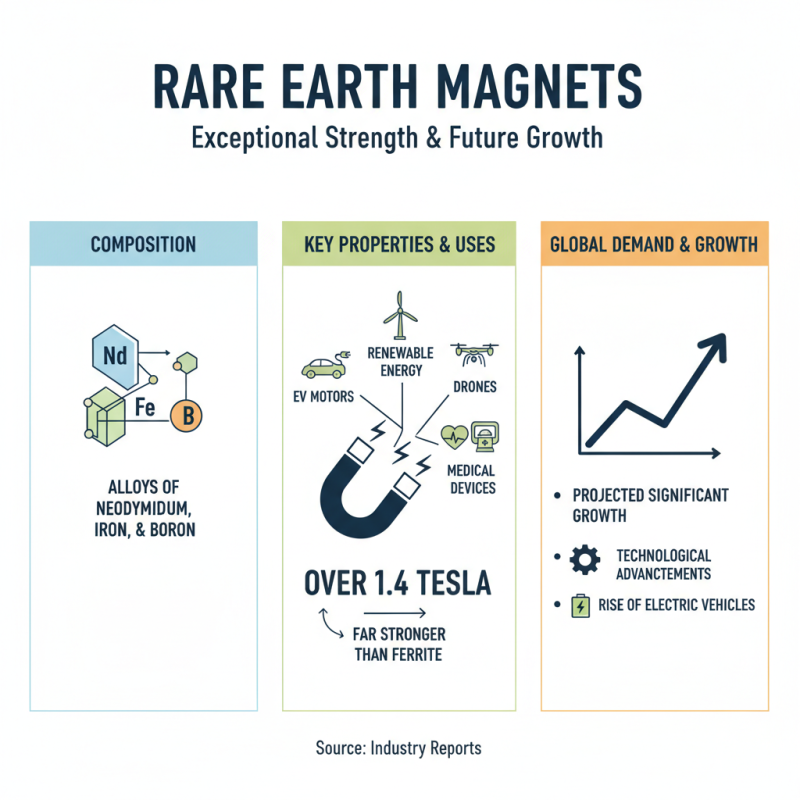
Rare earth magnets are known for their exceptional strength. They are made from alloys containing neodymium, iron, and boron. Their magnetic properties make them ideal for various applications, from motors to medical devices. According to industry reports, the global demand for rare earth magnets is projected to grow significantly. This growth is influenced by advancements in technology and the rise of electric vehicles. These magnets can deliver magnetic fields over 1.4 teslas, making them far more powerful than traditional ferrite magnets.
When selecting a rare earth magnet for a specific application, consider its grade and size. Higher grades offer greater strength but may cost more. It’s essential to evaluate the specific needs of your project. For instance, if you require a smaller size but with high pull force, choose a high-grade magnet. Be aware that while powerful, these magnets can also be brittle. Physical care is crucial to prevent chipping and breakage.
**Tips**: Always handle rare earth magnets with caution. Their strong attraction can lead to injuries. Store them properly in a designated place. Consider using protective barriers to keep fingers safe during use. Evaluate if the magnet’s size fits your intended application. Larger magnets may be unnecessary for smaller projects. Assessing the right features will save time and resources.
Types of Rare Earth Magnets: Neodymium vs. Samarium-Cobalt
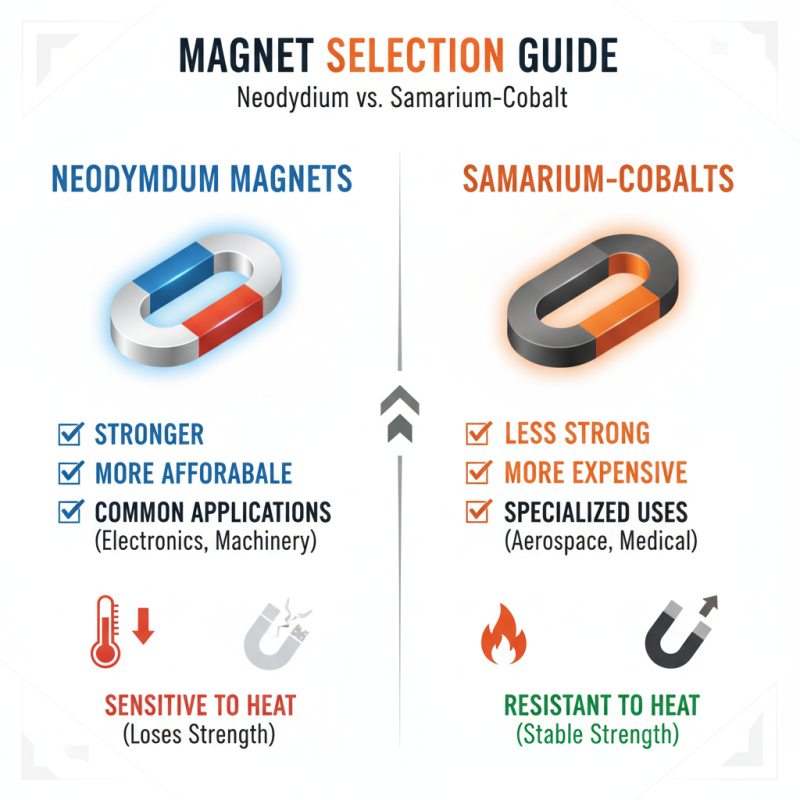
When choosing between neodymium and samarium-cobalt magnets, understanding their differences is crucial. Neodymium magnets are stronger and more affordable. They excel in various applications, from consumer electronics to industrial machinery. However, they are sensitive to high temperatures. If exposed, their strength diminishes rapidly.
Samarium-cobalt magnets, on the other hand, resist heat better. They maintain their magnetic strength even in extreme conditions. This quality makes them ideal for aerospace and military applications. However, they come with a higher price tag. Users may find them less accessible for casual projects.
Tips: Always consider the environment your magnets will be used in. If you need reliability under heat, samarium-cobalt is your best bet. For everyday uses, neodymium magnets often do the trick. Remember, the initial cost can be deceiving. Cheaper magnets may require replacements sooner, leading to higher long-term expenses. Make your choice wisely.
Top 10 Rare Earth Magnets: Features and Specifications
Rare earth magnets are essential in various applications, spanning from electronic devices to industrial machinery. These magnets, primarily composed of neodymium, samarium-cobalt, and other rare earth elements, offer remarkable strength and durability. According to industry reports, the global rare earth magnet market is expected to surpass $20 billion by 2025, driven by the surge in demand for electronic vehicles and renewable energy technologies.
When selecting a rare earth magnet, consider factors like magnetic strength, temperature tolerance, and size. For instance, neodymium magnets often provide the highest magnetic pull at room temperature. However, their performance can diminish at elevated temperatures, limiting their application in high-heat environments. Meanwhile, samarium-cobalt magnets maintain their stability under extreme conditions but are generally more expensive.
It's crucial to understand that while these magnets are powerful, improper handling can lead to safety concerns. Their strong attraction can pose risks, such as pinching injuries, during assembly or disassembly. More research into safer usage is necessary as reliance on rare earth materials grows. Balancing performance with safety is an ongoing challenge that the industry must address.
10 Best Rare Earth Magnets for Your Projects and Applications
| Magnet Type |
Size (mm) |
Pull Force (lbs) |
Temperature Limit (°C) |
Coating Type |
| Neodymium Disc |
20 x 5 |
15 |
80 |
Nickel |
| Neodymium Block |
30 x 10 x 5 |
50 |
80 |
Zinc |
| Neodymium Ring |
15 x 6 x 5 |
35 |
80 |
Epoxy |
| Neodymium Sphere |
12 |
10 |
80 |
Nickel |
| SmCo Disc |
20 x 10 |
20 |
300 |
Nickel |
| SmCo Block |
25 x 10 x 5 |
55 |
300 |
Zinc |
| Neodymium Cube |
10 x 10 x 10 |
16 |
80 |
Nickel |
| Neodymium Oval |
40 x 20 x 10 |
60 |
80 |
Epoxy |
| Neodymium Triangle |
30 x 30 x 10 |
45 |
80 |
Nickel |
Choosing the Right Rare Earth Magnet for Your Project Needs
Selecting the right rare earth magnet can significantly impact your project’s success. These magnets are powerful and versatile, found in many applications. However, not all rare earth magnets are the same. The choice often depends on specific project requirements.
Consider size. A small magnet can work for lightweight applications like crafts, while larger ones are better for machinery or industrial use. The strength matters too. Some projects may require a magnet that can lift several pounds. Others need only a gentle pull. It’s also critical to think about temperature tolerance. Some rare earth magnets lose strength in high heat.
Do not overlook the coating of the magnets. A protective layer can prevent corrosion. However, it might change the magnet's effectiveness. Testing a few options can help you find the best match. Remember, experimentation can be a key part of the process. Mistakes might lead to unexpected results. This is how innovation often happens.
10 Best Rare Earth Magnets for Your Projects and Applications
The chart above illustrates the magnetic strength of different grades of rare earth magnets measured in Gauss. Higher numbers indicate a stronger magnetic field, making them suitable for various applications in projects requiring intense magnetic force.
Safety Guidelines and Best Practices for Using Rare Earth Magnets
Rare earth magnets are powerful tools in various applications, but safety must be a priority. According to a study by the National Institute of Standards and Technology, these magnets can be significantly stronger than conventional magnets. Therefore, handling them improperly can lead to injuries. Users must take special care when working with magnets rated above 1 Tesla. The strong magnetic field can pinch fingers or cause accidents involving nearby metallic objects.
When using rare earth magnets, consider environmental factors. These magnets can be sensitive to temperature and corrosion. The American Society for Testing and Materials indicates that operating temperatures over 80 degrees Celsius can cause demagnetization. Users should keep magnets in a dry, cool place to maintain their effectiveness. Furthermore, using gloves can prevent injuries from sudden snaps when two magnets come together unexpectedly.
Education is key in preventing accidents. Workers should understand the risks associated with these magnets. An analysis by the Journal of Safety Research highlighted that training reduces the likelihood of injuries related to magnetic materials. Labeling storage areas and using protective barriers can also enhance safety. While rare earth magnets offer excellent performance, mindfulness and education are essential for safe handling.