How to Choose Rare Earth Magnets for Your Projects?
Choosing the right Rare Earth Magnets can be critical for your projects. Many engineers struggle to understand their options. Dr. Alice Thompson, a leading expert in magnet technology, emphasizes, “The right magnet can either solve your problem or complicate it further.”
Rare Earth Magnets, known for their strong magnetic fields, come in various grades. Selecting the right type depends on your specific needs. For example, neodymium magnets are powerful but can be brittle. They require careful handling and installation.
Understanding factors like size, shape, and magnetic strength is vital. It’s easy to overlook these details, which can lead to project failures. Each project might have unique demands. Reflecting on your approach is crucial. Rare Earth Magnets offer great potential, but improper selection can lead to frustrating outcomes.
Overview of Rare Earth Magnets and Their Applications
Rare earth magnets are powerful tools in various applications. They are made from alloys of rare earth elements. These magnets offer high strength and compact size, making them desirable for many projects. From electronics to renewable energy, their uses are diverse. For example, they are central in motors, generators, and sensors.
In the electronics sector, they help improve efficiency and performance. They can be found in loudspeakers, headphones, and even phones. The automotive industry also benefits from their strength, using them in electric vehicles. Renewable energy systems often rely on these magnets in wind turbines and solar panels. However, they may not always be easy to source. Finding the right type can be challenging, and the cost can vary.
Depending on the project, not all rare earth magnets are suitable. Some might be too strong for delicate applications. It’s crucial to evaluate the specific needs of your project. Often, experimentation can lead to the best results. Understanding the properties of each type helps avoid unforeseen issues. Users need to be aware of potential over-magnetization or misalignment. This requires careful planning and reflection on choices.
How to Choose Rare Earth Magnets for Your Projects?
| Magnet Type |
Dimensions (mm) |
Magnetic Strength (N) |
Temperature Resistance (°C) |
Applications |
| Neodymium (N42) |
10 x 5 x 5 |
15 |
80 |
Hobby Projects, Crafts |
| Neodymium (N52) |
20 x 10 x 5 |
48 |
100 |
Industrial Use, Motor Design |
| Samarium-Cobalt (SmCo) |
15 x 5 x 2 |
20 |
300 |
Aerospace, High-Temperature Applications |
| Neodymium (N35) |
5 x 5 x 5 |
12 |
60 |
Home Improvement, Education |
| Neodymium (N38) |
30 x 15 x 10 |
80 |
120 |
Electronics, Sensors |
Key Properties of Rare Earth Magnets to Consider
When choosing rare earth magnets for your projects, consider their key properties. These magnets are powerful and compact. They are made from neodymium, samarium, and cobalt. Their strength is measured in grades, with higher numbers indicating a stronger magnet.
One essential property is the magnet’s pull force. This determines how much weight it can hold. Consider how it will be used before selecting the force needed. The size also matters. A small magnet may be adequate, but a project may require larger sizes.
Tip: Always check the temperature resistance. Some rare earth magnets lose strength at high temperatures. This can affect your project's outcome. Additionally, think about the environment. Will moisture weaken the magnet?
Magnet shape is another factor. Discs, cylinders, and blocks serve different purposes. A disc magnet may work for a specific application, while a block magnet fits another. The shape affects the surface area in contact with your project. Experimenting with sizes and shapes can lead to unexpected challenges.
Key Properties of Rare Earth Magnets to Consider
This bar chart represents the comparison of key properties of different types of rare earth magnets including N52, N42, and N35 magnets based on their Maximum Energy Product (BHmax), Coercivity (Hcj), and Operating Temperature (Tmax).
Types of Rare Earth Magnets and Their Specific Uses
When selecting rare earth magnets, understanding the types and their uses is essential.
Neodymium magnets are the strongest available, often used in motors and generators.
Their ability to create intense magnetic fields makes them ideal for compact designs.
They can also feature various coatings to prevent corrosion,
influencing their longevity in specific applications.
Samarium-cobalt magnets are another type.
They excel in high-temperature environments, making them suitable for aerospace applications.
These magnets are more expensive but offer greater stability in harsh conditions.
Using them in electronic devices can enhance performance,
but the cost must be weighed against the benefits.
Tips: Always consider the environment before choosing a magnet type.
The right magnet can save time and resources in your project.
Keep in mind the size and shape of the application.
A poorly fitted magnet can lead to inefficient performance.
If in doubt, consulting with an expert can be invaluable. Testing different magnet types may also be necessary for optimal outcomes.
Factors Influencing the Choice of Rare Earth Magnets
When choosing rare earth magnets, several factors come into play. The type of magnet is crucial. Neodymium magnets are strong and versatile. They work well for various applications. You might consider size next. Larger magnets offer more power, but they can be bulky. A balance is essential. Consider the space you have for your project. Sometimes, small magnets can provide enough strength.
Another factor is the magnetic environment. Will these magnets be exposed to heat or moisture? Such conditions can impact their performance. Rare earth magnets can lose their strength when heated. Pay attention to the working temperature limits. It's often overlooked but can lead to performance issues later.
Cost is important, too. While you might want to invest in high-quality magnets, budget constraints can limit choices. Explore different suppliers and options. Don’t rush into a decision, as choosing the wrong magnet can hinder your project. Reflect on these factors carefully. Each choice will affect your outcomes significantly.
Best Practices for Sourcing and Purchasing Rare Earth Magnets
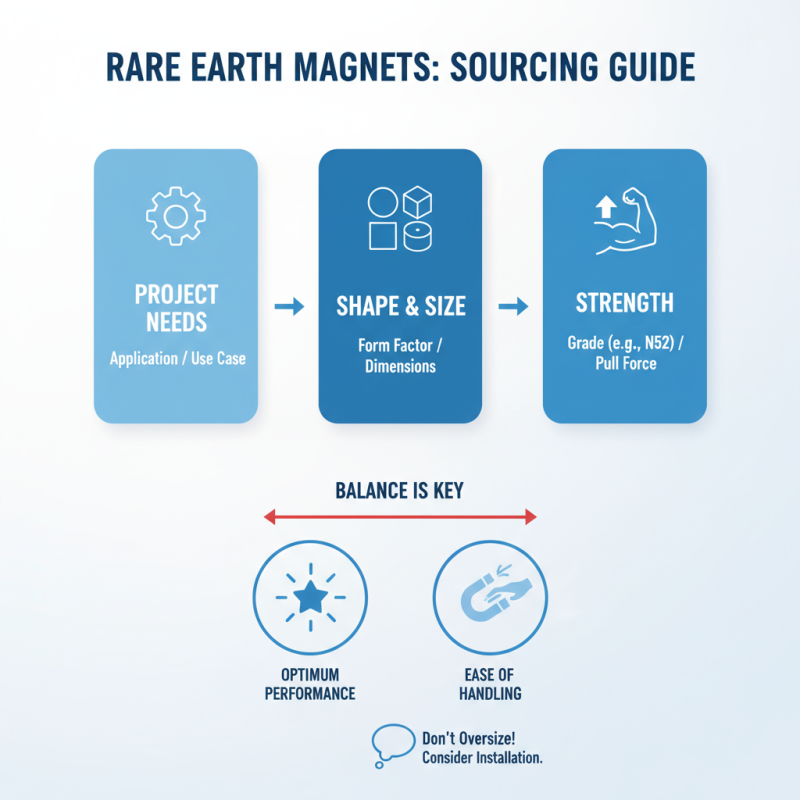
When sourcing rare earth magnets, consider your project's specific needs. These magnets come in various shapes, sizes, and strengths. Determine the strength you require for your application. A stronger magnet is not always the best choice, as it may lead to difficulties in handling or installation. It’s crucial to balance strength and application simplicity.
Check suppliers' credibility before purchasing. Research their background and customer reviews. This can prevent future issues. It can be tempting to choose the cheapest option, but quality matters. Low-cost magnets might lack durability. They can fail when you need them most.
Understand the material composition. Different alloys affect performance. Neodymium, for example, offers high strength and is popular. However, environmental conditions can impact functionality. Indoor and outdoor uses require different considerations. Reflect on your project’s environment before making decisions. It’s about long-term viability, not just immediate needs.