Top 10 Rare Earth Alloys: Properties, Uses, and Current Trends
Rare Earth Alloys are a fascinating subset of materials that play a crucial role in various industrial applications due to their unique properties. Composed primarily of rare earth elements, these alloys exhibit exceptional strength, corrosion resistance, and exceptional magnetic properties. As technological advancements continue to drive demand for high-performance materials, understanding the intricacies of Rare Earth Alloys has become increasingly important for engineers and researchers alike.
In this article, we will explore the top ten Rare Earth Alloys, delving into their properties, uses, and the current trends shaping their development and market dynamics. From their applications in electronics and renewable energy to their roles in the automotive and aerospace industries, the versatility of Rare Earth Alloys is remarkable. As we navigate through the complexities of these materials, we will highlight the ongoing innovations and challenges in sourcing and utilizing rare earth elements, shedding light on their significance in a modern, technologically driven world.

Top Rare Earth Alloys: Understanding Their Unique Properties
Rare earth alloys are distinguished by their unique properties, which derive from the incorporation of rare earth elements into various metal matrices. These alloys exhibit enhanced mechanical strength, corrosion resistance, and thermal stability, making them highly desirable in a variety of industrial applications. According to a report by the U.S. Geological Survey, the demand for rare earth elements is projected to grow significantly, with applications expanding into electronics, renewable energy technologies, and advanced manufacturing processes.
One of the standout features of rare earth alloys is their magnetic properties, which are critical for the production of high-performance magnets used in electric motors and generators. Research published in the Journal of Alloys and Compounds indicates that these alloys can maintain strong ferromagnetic properties even at elevated temperatures, which is essential for applications in electric vehicles and wind turbine generators. Additionally, their lightweight nature enhances energy efficiency across various sectors.
As industries increasingly pivot towards sustainable practices, rare earth alloys are gaining traction due to their ability to improve energy efficiency and reduce emissions. The global market for rare earth alloys is expected to reach $12 billion by 2027, driven by innovations in the electric vehicle sector and renewable energy systems. The advancement of processing technologies and recycling methods will also play a pivotal role in increasing the availability and sustainability of these important materials.
Top 10 Rare Earth Alloys: Properties and Uses
Key Applications of Rare Earth Alloys in Industry and Technology
Rare earth alloys possess unique properties that make them invaluable across various industries, particularly in technology and manufacturing. The combination of rare earth elements with other metals enhances characteristics such as magnetism, strength, and resistance to heat and corrosion. According to a report by the Department of Energy, the demand for rare earth alloys in the production of high-performance magnets, especially for electric vehicles and wind turbine generators, is projected to grow significantly, reaching an estimated market value of $10 billion by 2025. This surge reflects a global shift towards sustainable energy solutions.
In addition to energy applications, rare earth alloys are prominently used in electronics, where their unique thermal and electrical properties enable the production of more compact and efficient devices. Recent studies have shown that using rare earth elements can improve the efficiency of batteries, enabling longer-lasting and faster-charging solutions. Furthermore, the aerospace sector increasingly relies on these alloys for their lightweight and high-strength applications, which are critical in reducing fuel consumption and enhancing overall performance. As industries strive for innovation and sustainability, the role of rare earth alloys continues to expand, underscoring their importance in the modern technological landscape.
Current Market Trends and Demand for Rare Earth Alloys Worldwide
The global market for rare earth alloys has experienced significant shifts due to increasing demand in various high-tech applications. As industries such as renewable energy, electric vehicles, and advanced electronics continue to expand, the need for high-performance materials has surged. Rare earth alloys, known for their unique magnetic, catalytic, and luminescent properties, have become essential in the manufacturing of components that require superior performance under extreme conditions.
Current trends indicate a rising interest in developing sustainable supply chains for rare earth alloys. This emphasis on sustainability is largely driven by concerns about the environmental impact of mining and refining rare earth materials. As a result, companies are exploring recycling solutions and alternative sources to meet the growing demand. Moreover, geopolitical factors play a significant role in the rare earth market, as countries seek to secure their own supply chains to reduce dependency on major producers. The combination of these trends suggests a dynamic future for the rare earth alloys market, shaped by technological advancements and strategic efforts towards sustainable practices.
Analysis of Performance Metrics in Rare Earth Alloy Applications
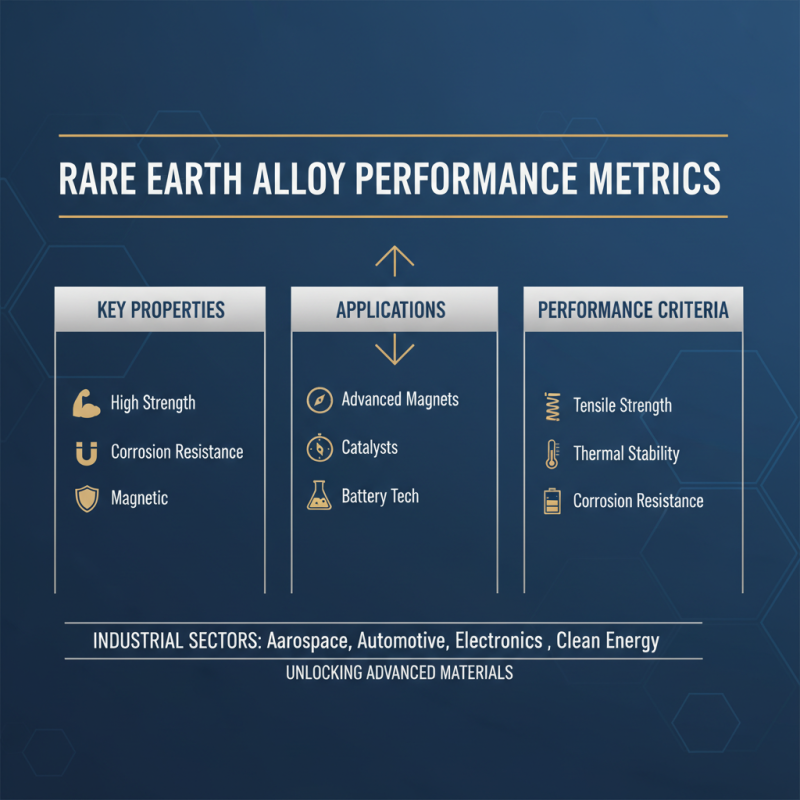
The analysis of performance metrics in rare earth alloy applications is crucial for understanding their effectiveness in various industrial sectors. Rare earth alloys, composed primarily of lanthanide elements, offer unique properties such as high strength, resistance to corrosion, and excellent magnetic properties. These attributes make them indispensable in the manufacturing of advanced materials, such as high-performance magnets, catalysts, and battery technologies. By assessing criteria such as tensile strength, thermal stability, and corrosion resistance, researchers can gauge the suitability of specific rare earth alloys for targeted applications.
Moreover, recent trends in the utilization of rare earth alloys reveal a growing emphasis on sustainability and resource efficiency. As industries strive to reduce their environmental footprint, the demand for alloys that minimize resource usage while maintaining high performance is increasing. Performance metrics, including longevity and recyclability, are now being integrated into the development process to ensure that these materials not only meet current technological demands but also align with future sustainability goals. Through rigorous testing and optimization, manufacturers are increasingly able to produce rare earth alloys that deliver superior performance across various applications, from electronics to renewable energy solutions.
Future Innovations in Rare Earth Alloys: Emerging Research and Developments
Recent advancements in rare earth alloys have opened new frontiers in materials science, driven by the increasing demand for high-performance materials in various industries such as electronics, aerospace, and renewable energy. Emerging research emphasizes the importance of developing novel alloys that enhance the properties of traditional materials. For instance, a study from the Journal of Rare Earths highlights how specific combinations of neodymium and dysprosium can significantly improve the magnetic properties of alloys, making them essential for high-efficiency motors and generators. The global rare earth alloys market, valued at approximately $4.5 billion in 2022, is expected to grow at a CAGR of 6.5% through 2030, highlighting the importance of continued innovation in this field.
Innovations are not only limited to enhancing mechanical and magnetic properties but also include efforts towards sustainability. Researchers are focusing on recycling rare earth elements from end-of-life products, which could yield a recovery rate of up to 80%, according to the European Commission's report on critical raw materials. This approach not only helps mitigate supply risks but also reduces environmental impact, aligning with global sustainability goals. As the landscape of rare earth alloys evolves, the integration of smart materials—those that respond dynamically to their environment—could represent the next big leap, incorporating the benefits of rare earths into adaptive, multifunctional applications.