How to Use Rare Earth Alloy for Maximum Performance?
Rare Earth Alloy is becoming vital in various industries. Its unique properties allow for enhanced performance in demanding applications. According to a recent market analysis by Research and Markets, the global rare earth materials market is projected to reach $9 billion by 2025. This growth is driven by advancements in technology and increased demand for high-performance materials.
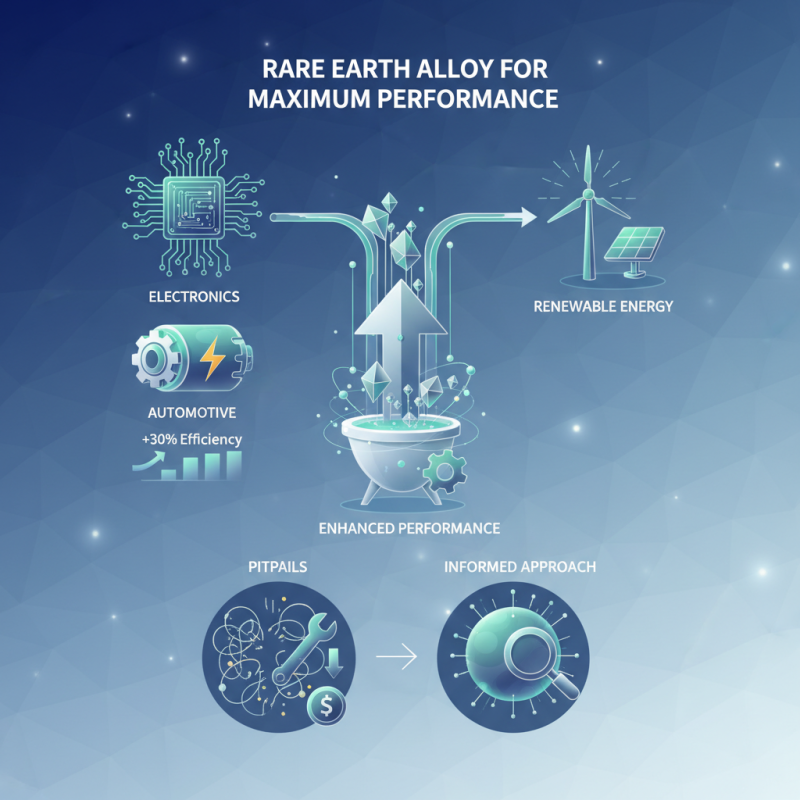
Utilizing Rare Earth Alloy can significantly improve efficiency in sectors such as electronics, automotive, and renewable energy. For instance, these alloys are used in electric vehicle motors, boosting their efficiency by up to 30%. However, achieving maximum performance requires an in-depth understanding of material properties and processing methods.
Companies often fall short in optimization, neglecting critical factors like alloy composition and treatment processes. Overlooking such details can hinder performance while increasing costs. It is essential to reflect on these pitfalls and strive for a more informed approach to harnessing the full potential of Rare Earth Alloy.
Understanding Rare Earth Alloys and Their Benefits
Rare earth alloys are unique materials that combine rare earth elements with metals. These alloys have remarkable properties. They offer improved magnetic and electrical performance. This makes them essential for various applications. Motors, generators, and batteries often use these alloys. Their lightweight nature enhances efficiency in many devices.
The benefits of rare earth alloys extend beyond performance. They can improve durability in high-stress environments. This results in longer-lasting products. However, working with these materials has challenges. The extraction process can be environmentally taxing. Additionally, recycling remains an area needing improvement.
Rare earth alloys can be expensive. This creates barriers for some manufacturers. Finding a balance between cost and performance is crucial. Companies must assess their needs carefully. They should also consider potential alternatives. Embracing innovation may lead to more sustainable options in the future.
Performance Metrics of Rare Earth Alloys
This bar chart illustrates the tensile strength of various rare earth alloys, highlighting their performance levels. The data showcases how different alloys can significantly vary in strength, which is essential for applications requiring high durability and resistance.
Applications of Rare Earth Alloys in Various Industries
Rare earth alloys play a significant role in various industries today. These alloys are essential in high-performance applications, particularly in the electronics and automotive sectors. According to a 2021 market research report, the rare earth alloy market is expected to grow by a compound annual growth rate of 8.1%, reaching approximately $7.9 billion by 2026.
In the aerospace industry, rare earth alloys improve the performance of turbine engines. These materials withstand high temperatures, increasing engine efficiency. Furthermore, electric vehicles benefit from rare earth magnets, which enhance the efficiency of motors and batteries. The electric vehicle market is anticipated to see a surge, with projections indicating 30% of all car sales will be electric by 2030.
Tip: When selecting rare earth alloys, consider the specific requirements of your application. Analyze the performance metrics to ensure compatibility with your product design.
Despite their benefits, sourcing rare earth materials poses challenges. Environmental concerns and geopolitical issues can disrupt supply chains. Manufacturers should be mindful of these factors.
Tip: Research your supply chain carefully. Look for reliable sources that prioritize sustainability and ethical standards. This practice can safeguard your production against future disruptions.
Key Properties Affecting the Performance of Rare Earth Alloys
Rare earth alloys possess unique properties that significantly affect their performance. High magnetic strength is a key characteristic. According to a recent industry report, these alloys can reach magnetic energies of 30 MGOe or more under optimal conditions. The ability to maintain stability during heat is also important. This property is crucial for applications in motors and generators. As temperatures rise, rare earth alloys must maintain their structural integrity.
**Tip:** Always assess the thermal resistance of your rare earth alloy selection. Test how it performs under varying temperatures to avoid failures.
Another vital property is corrosion resistance. In many environments, alloys are prone to oxidation and corrosion, which can diminish their effectiveness. Studies show that alloys with improved protective coatings can last significantly longer. However, find the right balance; over-engineering can add unnecessary costs.
**Tip:** Conduct regular maintenance checks on rare earth components. Small monitoring steps can extend the lifespan of your assemblies.
When utilizing rare earth alloys, keep in mind their processing methods. The fabrication processes can affect performance. Some methods may lead to impurities or defects, impacting the final product. Even minor inconsistencies can lead to performance issues down the line. Careful selection and treatment of rare earth materials are essential for optimal performance.
How to Use Rare Earth Alloy for Maximum Performance? - Key Properties Affecting the Performance of Rare Earth Alloys
| Property |
Description |
Effect on Performance |
| Magnetic Strength |
The ability of the alloy to exhibit magnetism. |
Higher magnetic strength increases the efficiency of motors and generators. |
| Corrosion Resistance |
The alloy's ability to withstand environmental degradation. |
Improved lifespan of components in harsh environments. |
| Thermal Stability |
The capacity of the alloy to maintain its properties at high temperatures. |
Enhanced performance in high-temperature applications. |
| Ductility |
The ability of the alloy to deform under tensile stress. |
Allows for complex shapes in manufacturing processes. |
| Electrical Conductivity |
The alloy's ability to conduct electric current. |
Important for applications in electronic and electrical systems. |
Best Practices for Manufacturing with Rare Earth Alloys
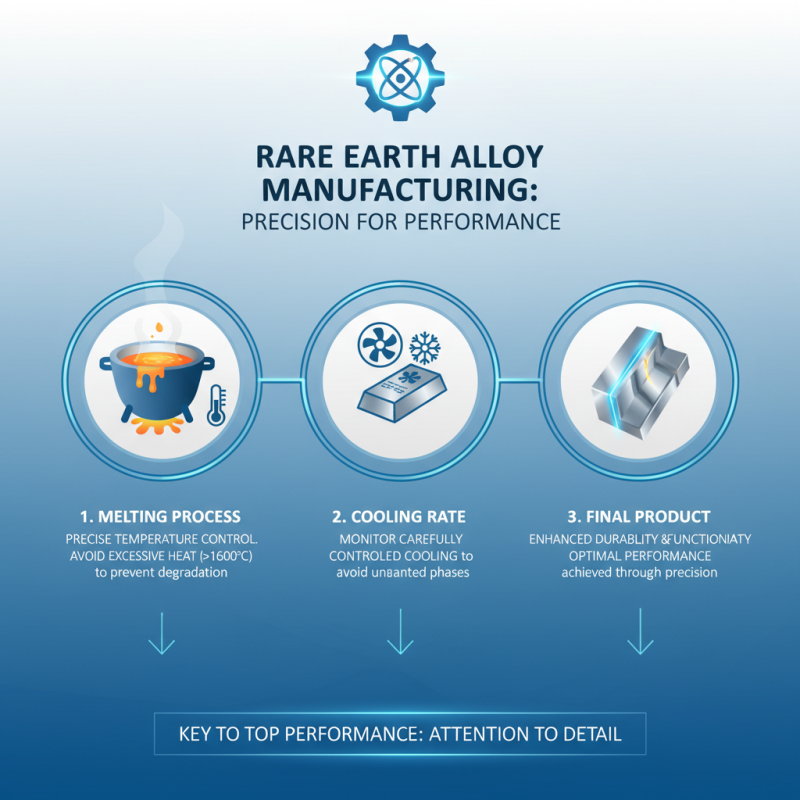
When using rare earth alloys, attention to detail in manufacturing is essential for achieving top performance. These alloys have unique properties that can enhance durability and functionality. Precise temperature control during the melting process is crucial. Too high a temperature can degrade the alloy's quality. Monitoring the cooling rate is also important. Quick cooling may lead to unwanted phases in the final product.
Choosing the right additives can significantly impact the final properties of the alloy. Conducting small-scale trials helps in understanding how adjustments influence the results. It's not always straightforward. Sometimes, unexpected reactions occur, leading to a trial-and-error approach. The process of refining your methods may take time but is vital for improvement. Pay attention to the compositions used, as small changes can lead to substantial differences.
Quality control measures during production are critical. Regular testing can help identify inconsistencies early. Sometimes, the results may not meet expectations. It’s essential to ask why. Understanding the failure points aids in process optimization. Continuous learning and adaptation form the backbone of successful manufacturing with rare earth alloys. Embracing the challenges can lead to innovation and better outcomes.
Future Trends and Innovations in Rare Earth Alloy Technologies
Rare earth alloys are gaining traction across various industries. Their unique properties promise higher efficiency and durability in applications. According to a recent market report, the rare earth elements market is expected to reach $10 billion by 2025. This growth is driven by the rise in demand for advanced materials.
Emerging technologies are exploring new alloy compositions. Innovations like magnetocaloric materials show potential in cooling applications. Researchers are investigating the integration of rare earth alloys in renewable energy systems. Reports suggest that these materials can improve performance in wind turbines and electric vehicles.
Challenges remain. The extraction process is often environmentally damaging. Supply chain issues also complicate availability. Industry experts stress the need for sustainable practices. The focus is shifting to recycling and reusing rare earth elements. As the landscape evolves, companies must adapt to these trends for maximum performance.